DAY 13 – WELLINGTON – AUKLAND
We were up early once again, checking out of the Rydges Hotel and making the short walk down the block to the Wellington Railway Station. Even in the morning quiet, the building has a presence. Completed in 1937, the station is built in a grand neo-Georgian style with tall colonnades, polished stone floors, and a cavernous main hall that feels more like an old-world civic building than a train depot. It’s one of the busiest transport hubs in the country, but at that hour the pace was calm, giving us a chance to take in the architecture before checking in for our full-day journey on the Northern Explorer.
The Northern Explorer is New Zealand’s premier long-distance train, running the length of the North Island between Wellington and Auckland. It’s known for its panoramic windows, open-air viewing carriage, and commentary that highlights the dramatic mix of coastlines, farmland, river gorges, and volcanic landscapes along the way.
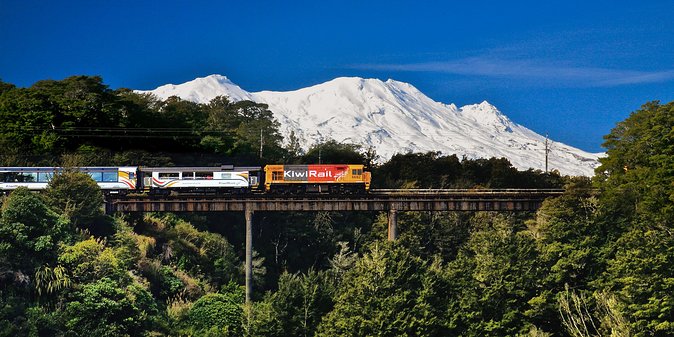
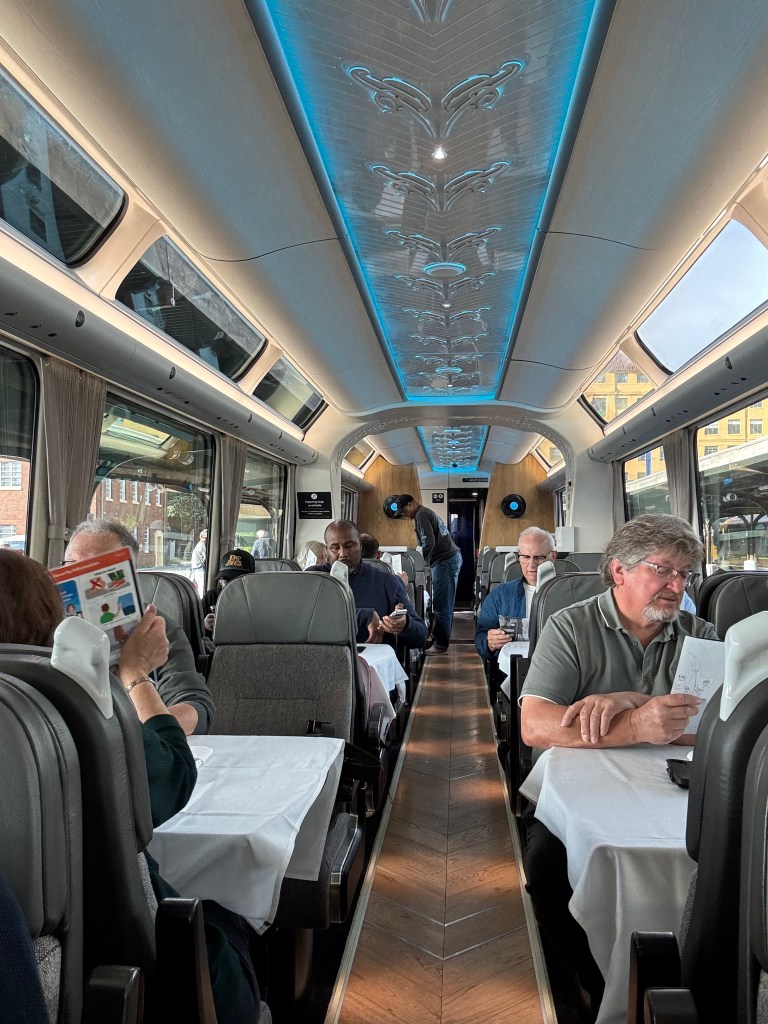
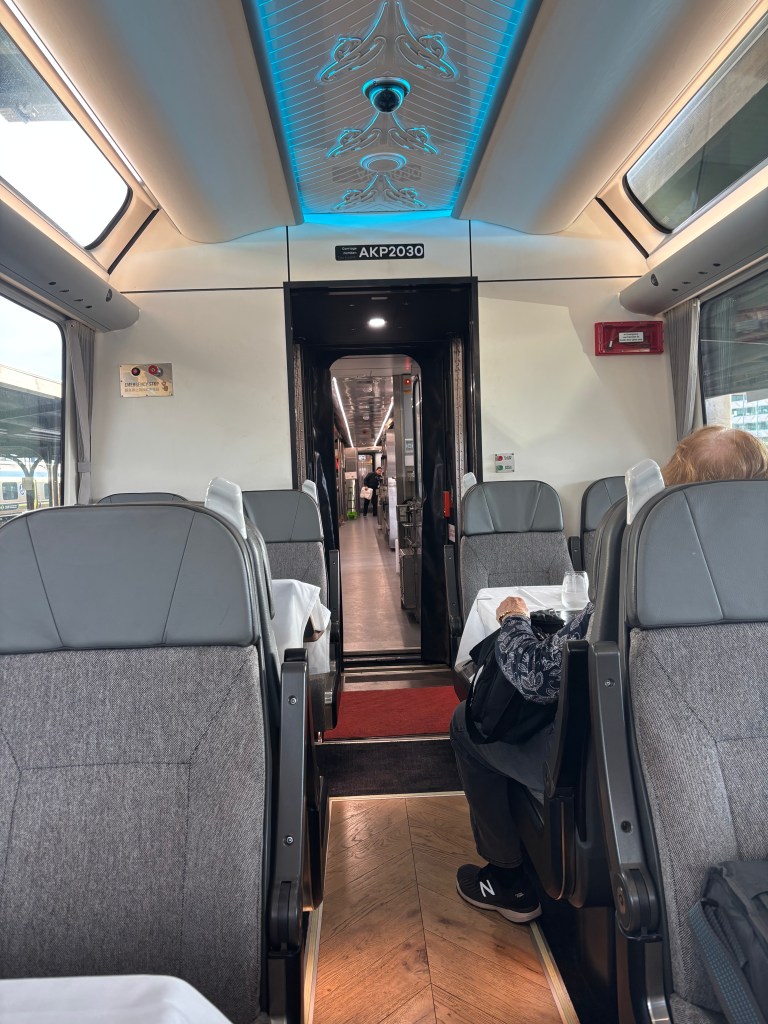
Stephen was thoughtful in booking us into Scenic Plus on the Northern Explorer—KiwiRail’s version of first class. It transforms the journey from simple transport into a curated experience. Scenic Plus passengers travel in a dedicated carriage with wide, reclining seats arranged to face the windows, making the most of the panoramic glass that frames the landscapes rolling by: volcanic plateaus, deep gorges, and endless stretches of green pasture.
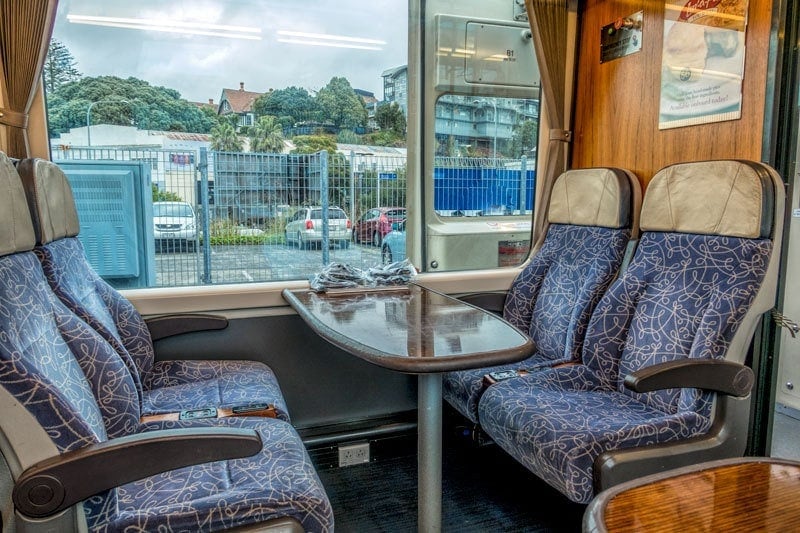
The service includes a multi-course menu inspired by regional New Zealand cuisine, prepared fresh onboard. Meals are plated and served at your seat, rather than cafeteria-style, and come paired with local wines, craft beers, and non-alcoholic options. Coffee and tea are available throughout the journey.
What sets Scenic Plus apart is the storytelling woven into the service. Hosts provide commentary about the regions you’re passing through—Māori history, engineering feats like the Raurimu Spiral, local towns, geology, and the dramatic shifts in climate and vegetation as you travel the length of the North Island. It turns the train into a moving classroom, with the added benefit of warm bread rolls, butter, and a glass of New Zealand pinot noir.
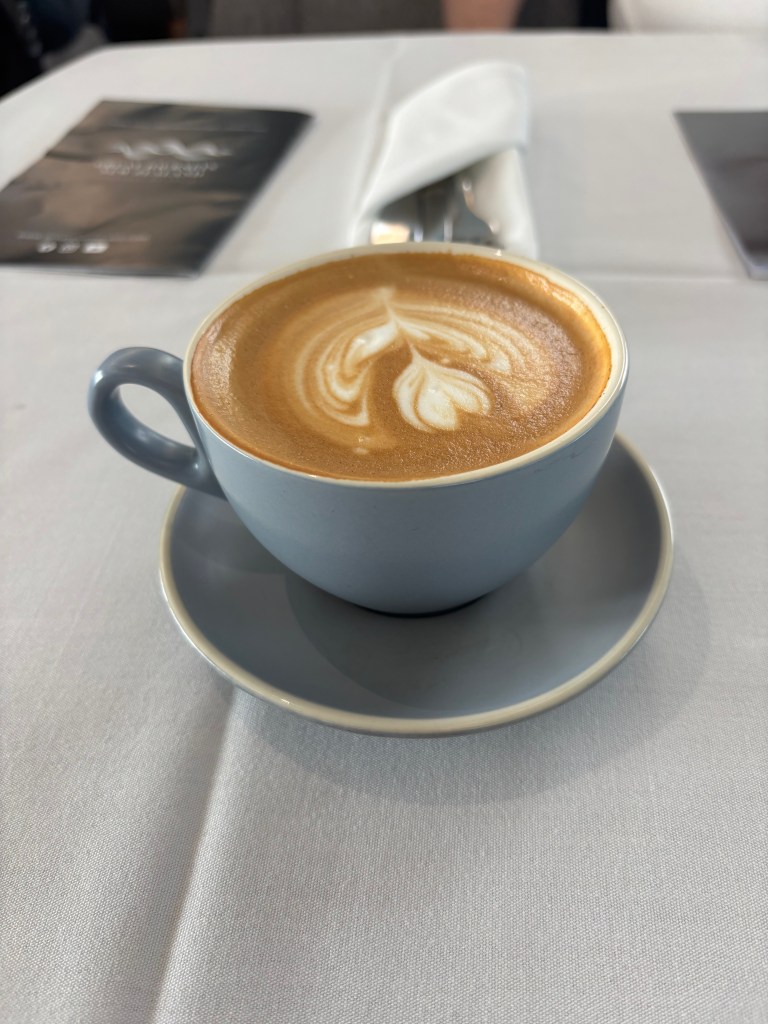
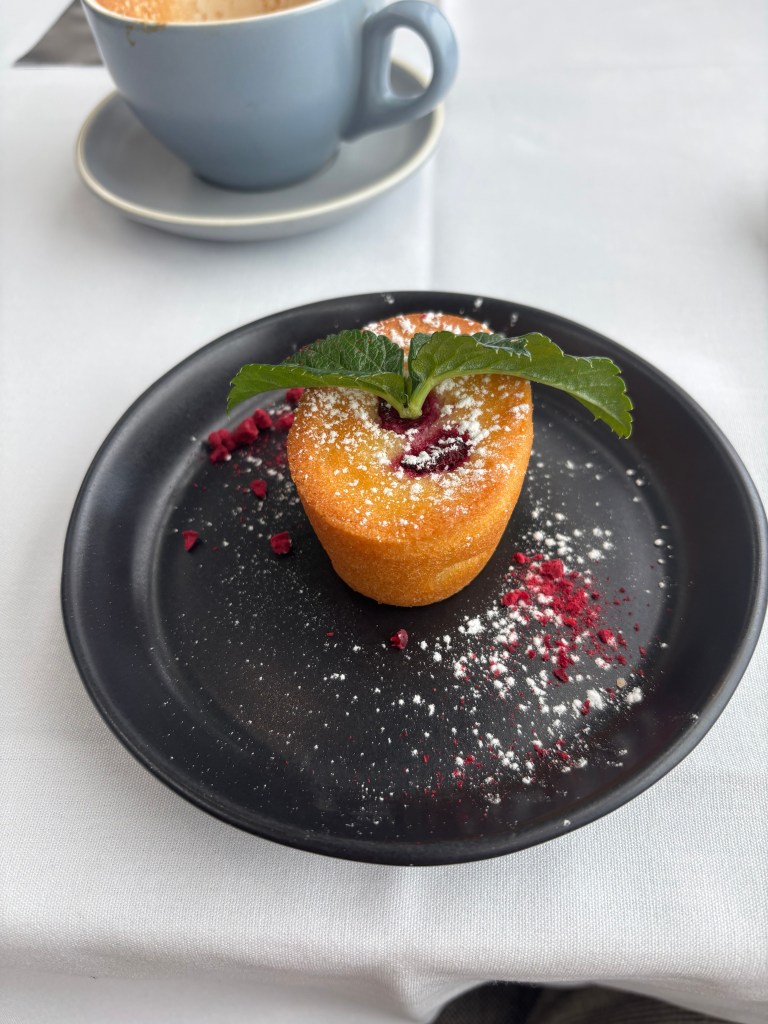
We boarded our car and found our table, pleasantly surprised to see that the coach was only half full. Each couple had their own table, which made settling in even more comfortable. Before the train even left the platform, attendants arrived with hot beverages — and we both chose a much-needed latte. Shortly after came a small orchard-fruit friand, light, soft, and just sweet enough to start the morning.
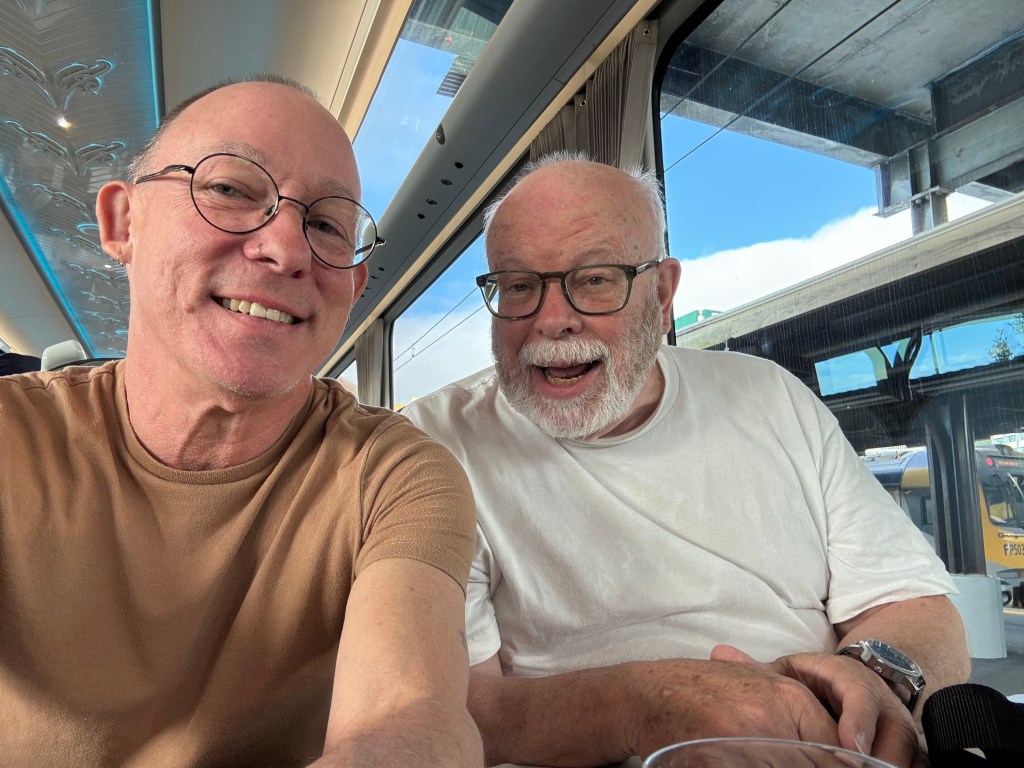
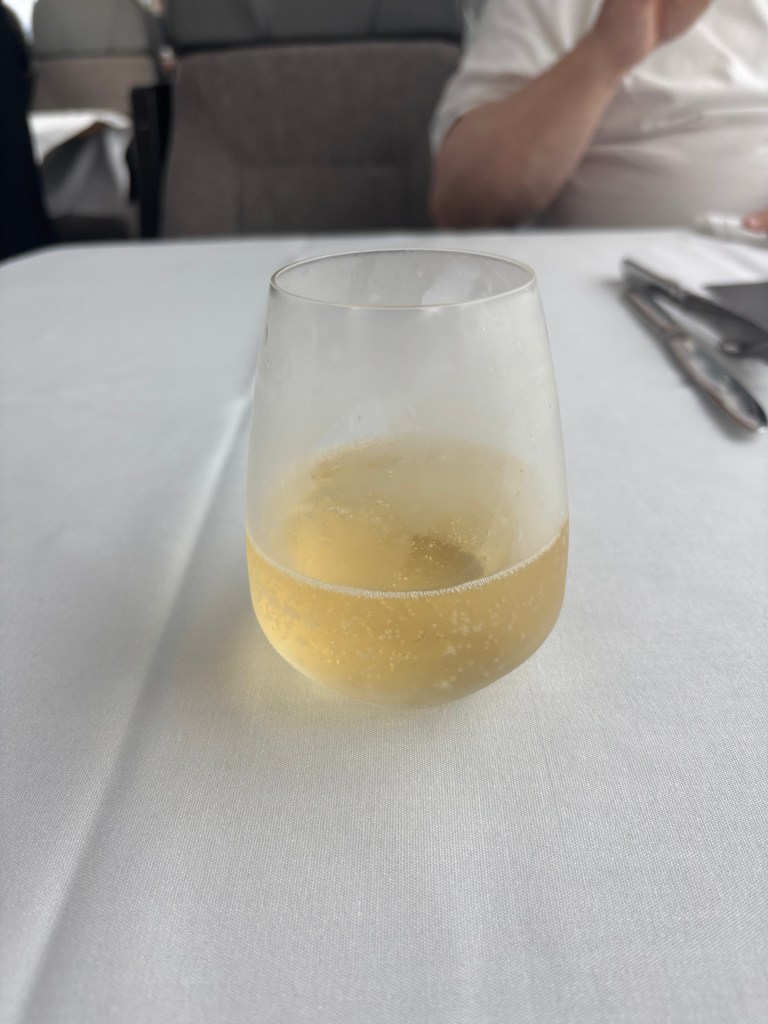
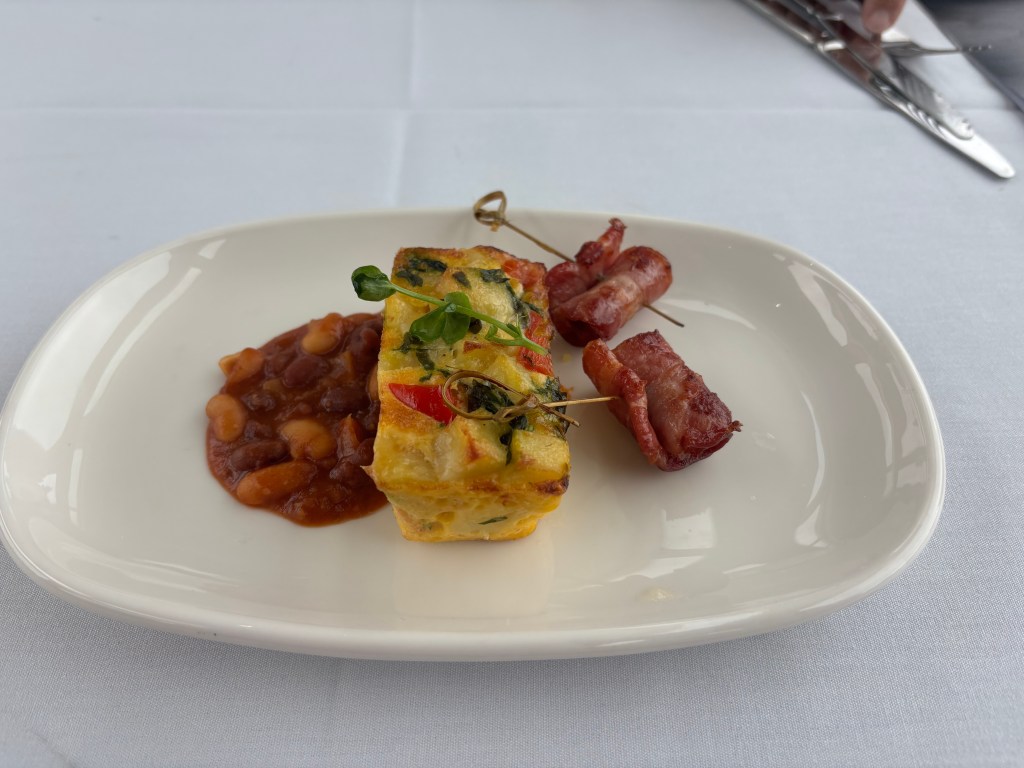
Breakfast followed not long after: a fresh seasonal vegetable frittata alongside spiced breakfast beans (a comforting Kiwi staple) and local crispy bacon. It was served with a glass of Hunter’s Miru Miru, a sparkling New Zealand wine whose name means “bubbles” in Māori. Simple, thoughtful, and perfect for a day spent watching the country unfold outside the window.
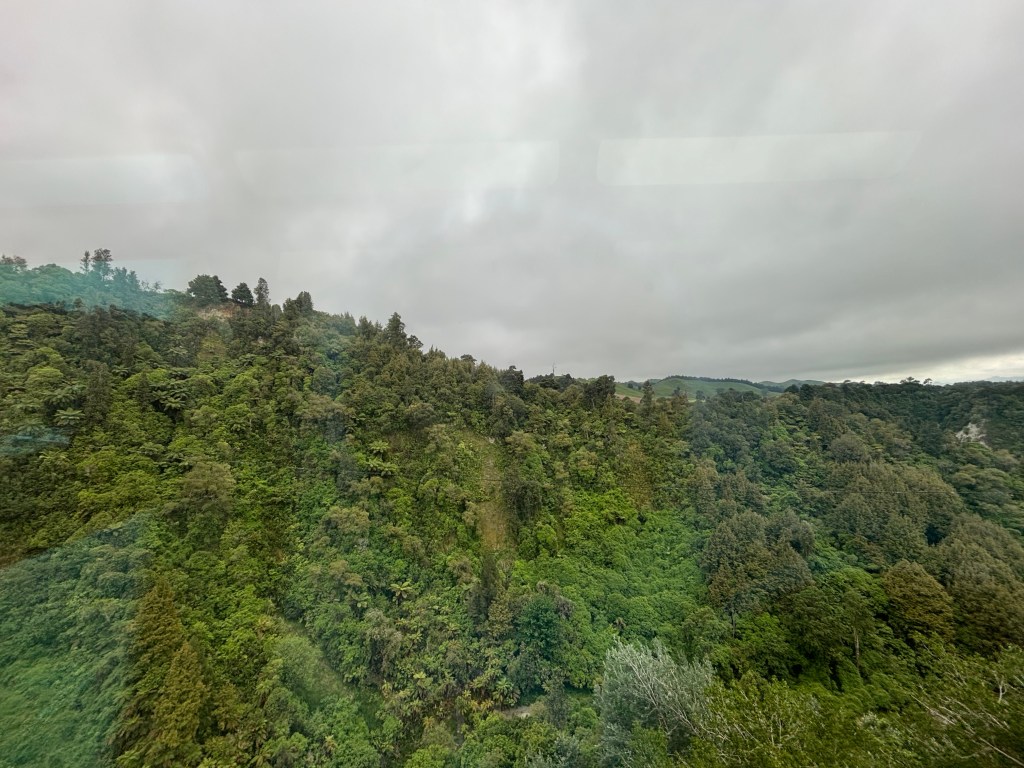
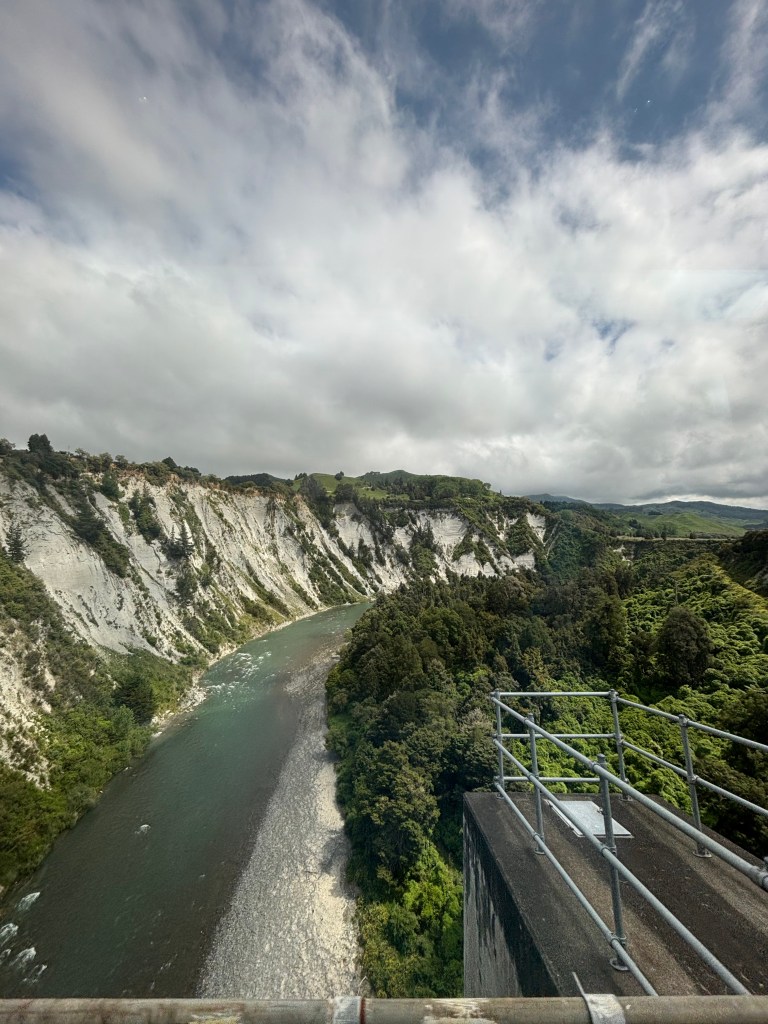
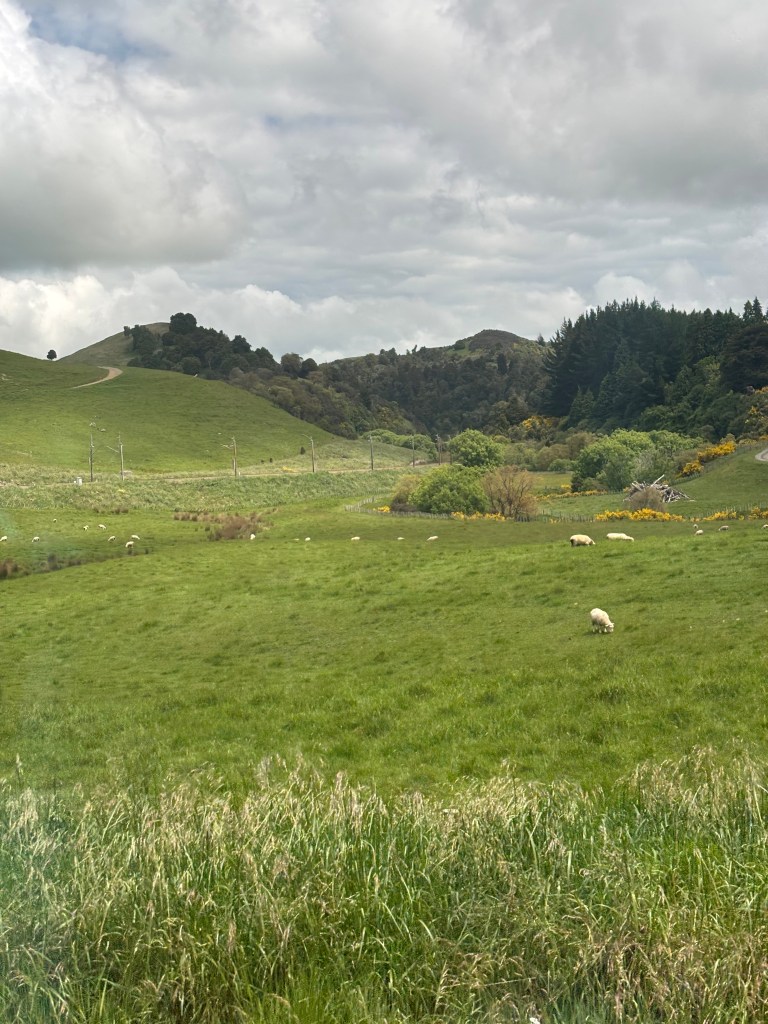
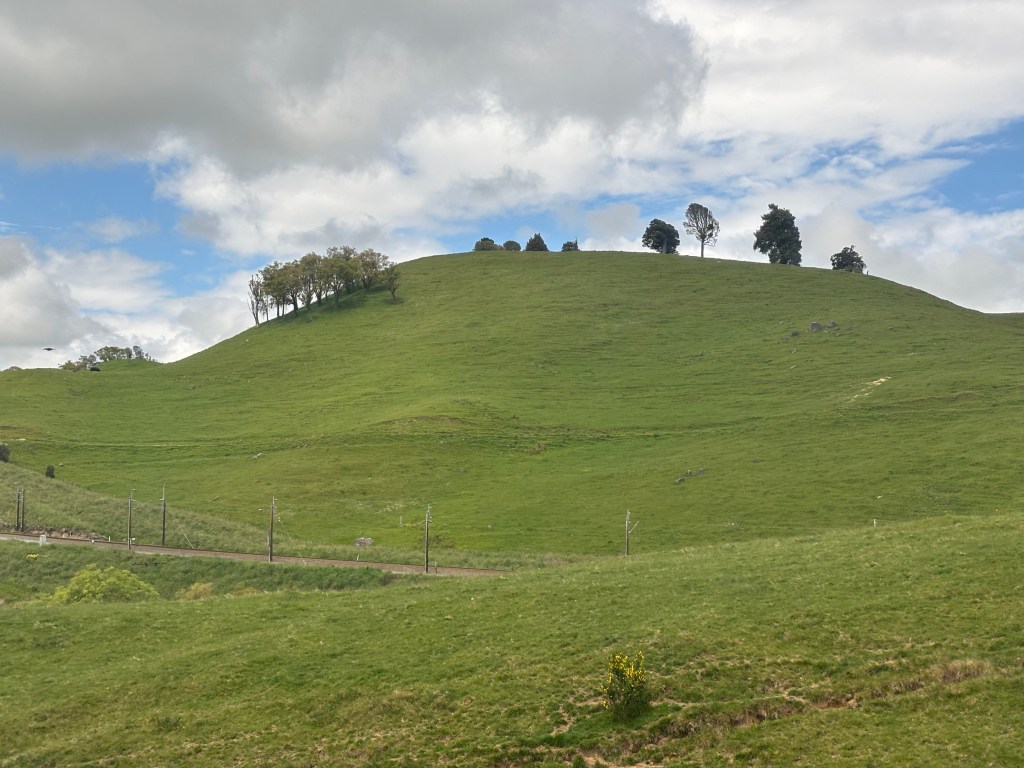
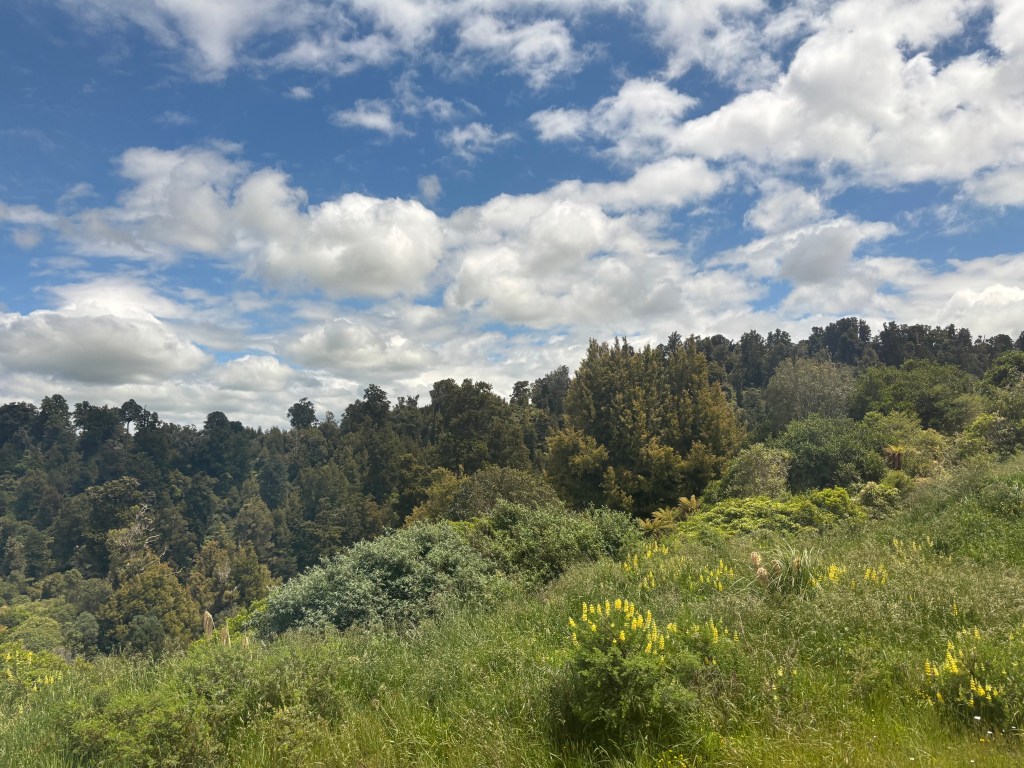
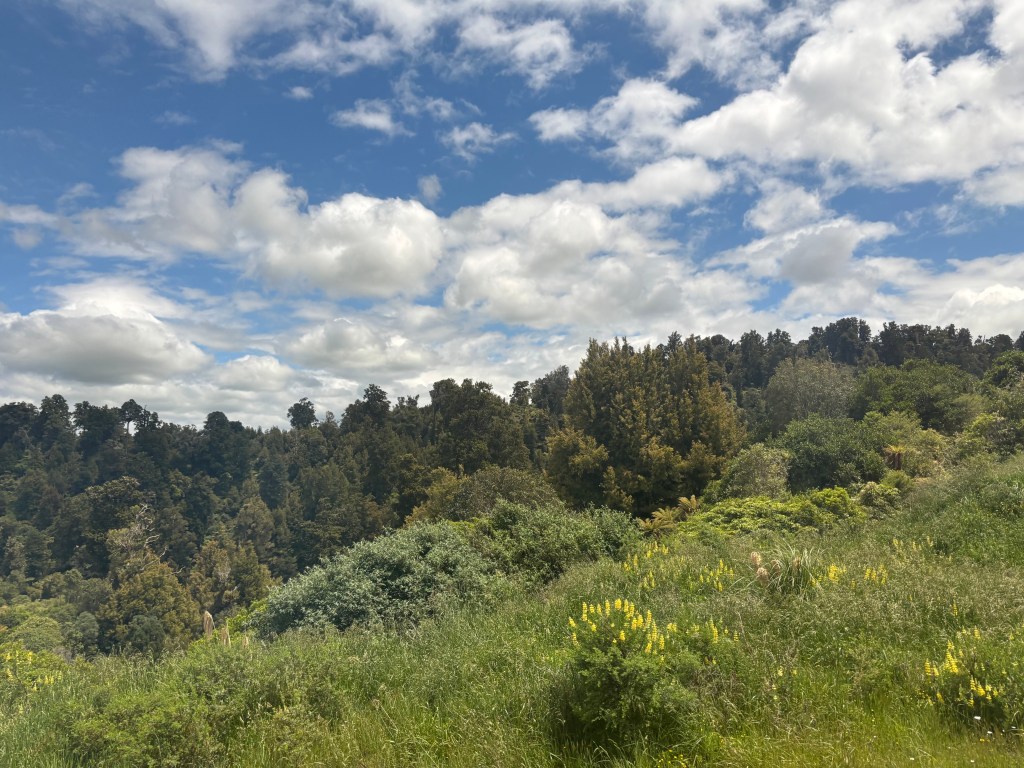
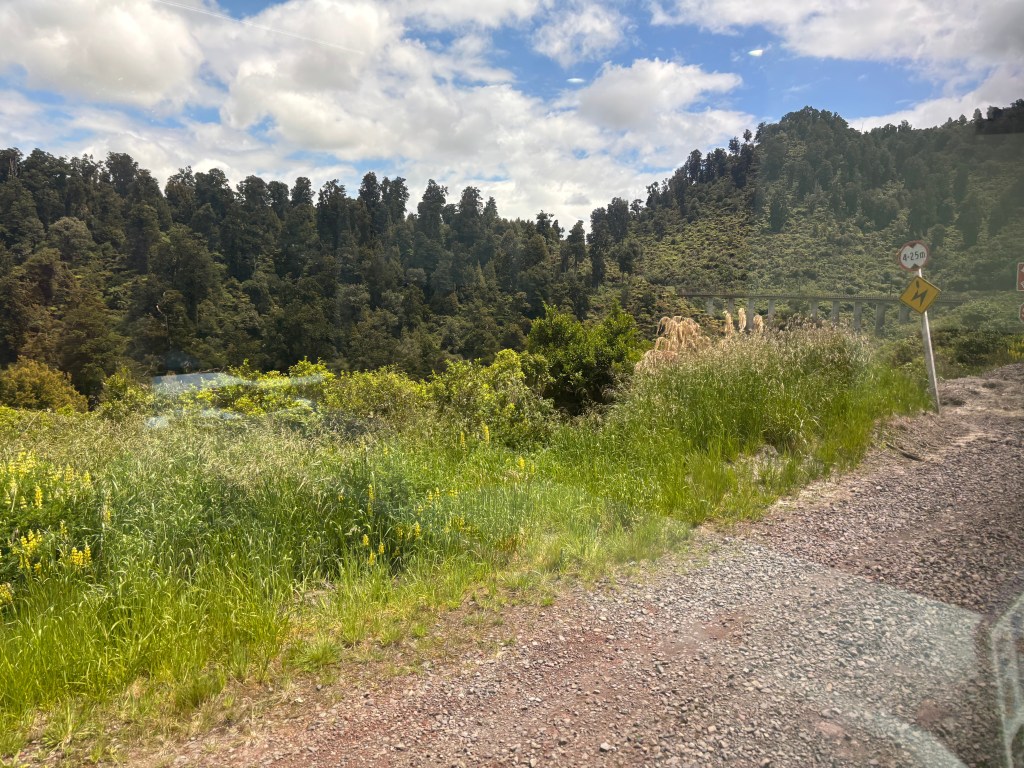
Between breakfast and lunch the scenery began to widen. Leaving the city, the train winds past the harborside suburbs before reaching the Kapiti Coast, where the Tasman Sea appears in sweeping views between stretches of native bush. North of there, the landscape turns pastoral — patchworked fields, neat farmhouses, and hills dotted with sheep that seem to outnumber every other living thing. Occasionally the train dipped into pockets of dense forest or crossed broad river valleys shaped by ancient volcanic forces.
Somewhere in this peaceful stretch, lulled by the rhythm of the train and the steady drift of scenery, I closed my eyes for a short nap — the kind that feels almost earned after so many early mornings.
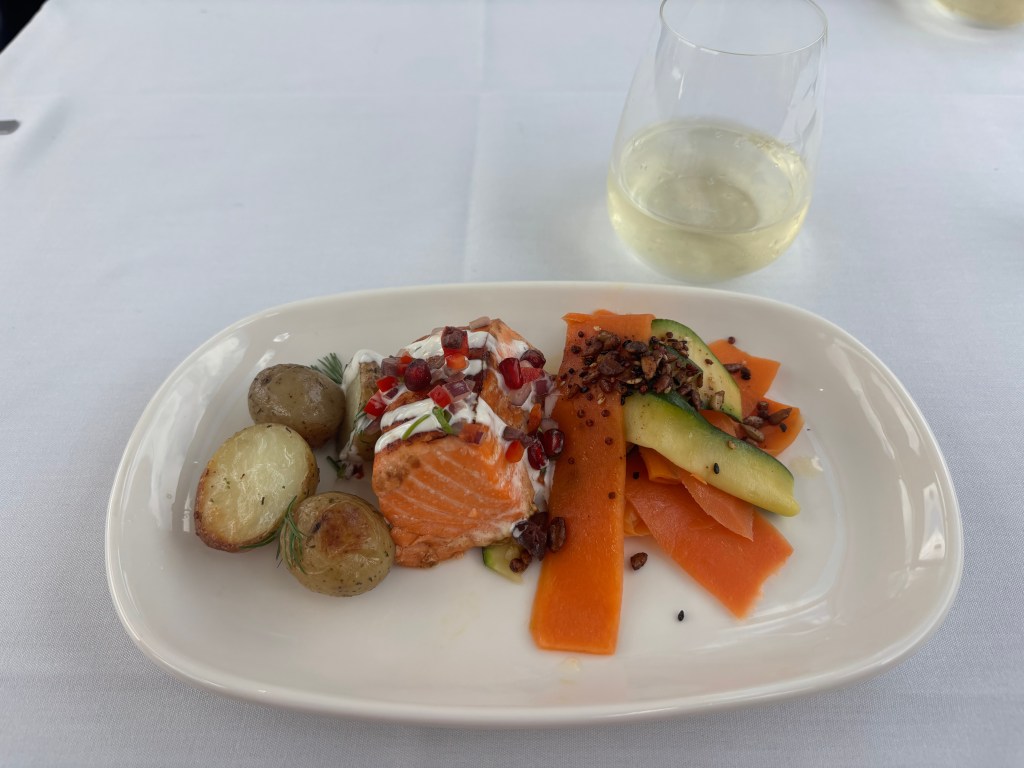
Lunch was Big Glory Bay glazed salmon with summer salsa of capsicum, onion, smokey zucchini salad with pomegranate and sunflower seeds, and Spencer Gold potatoes tossed in herb pesto with a sprinkle of rock salt paired with Dog Point Sauvignon Blanc.
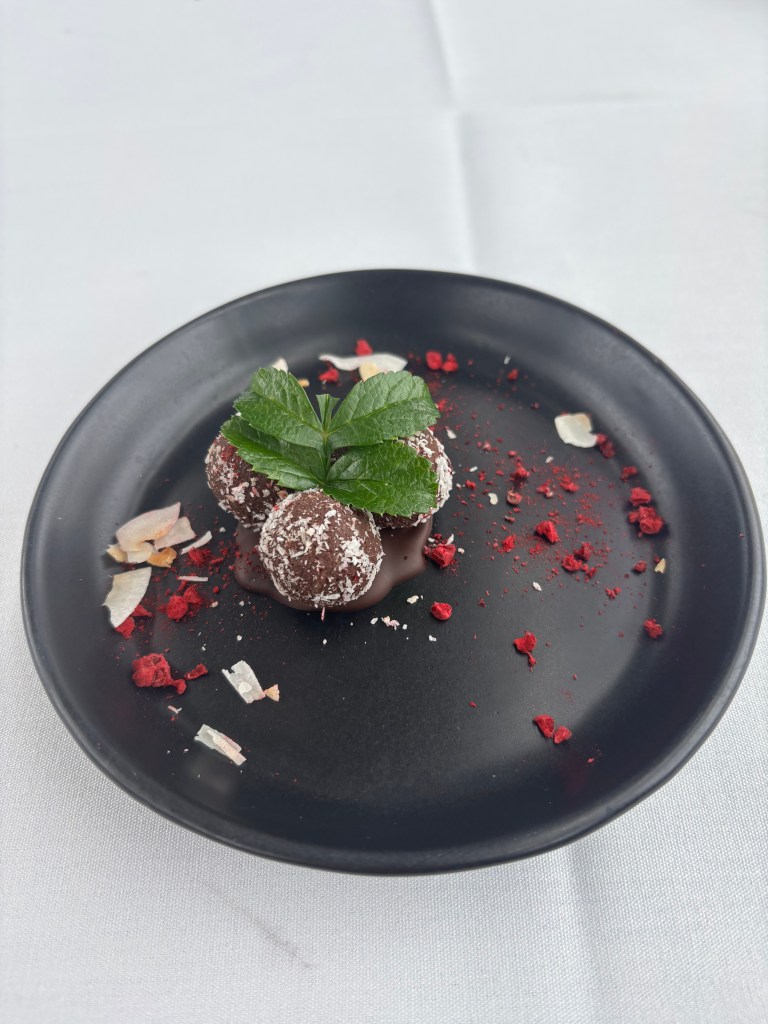
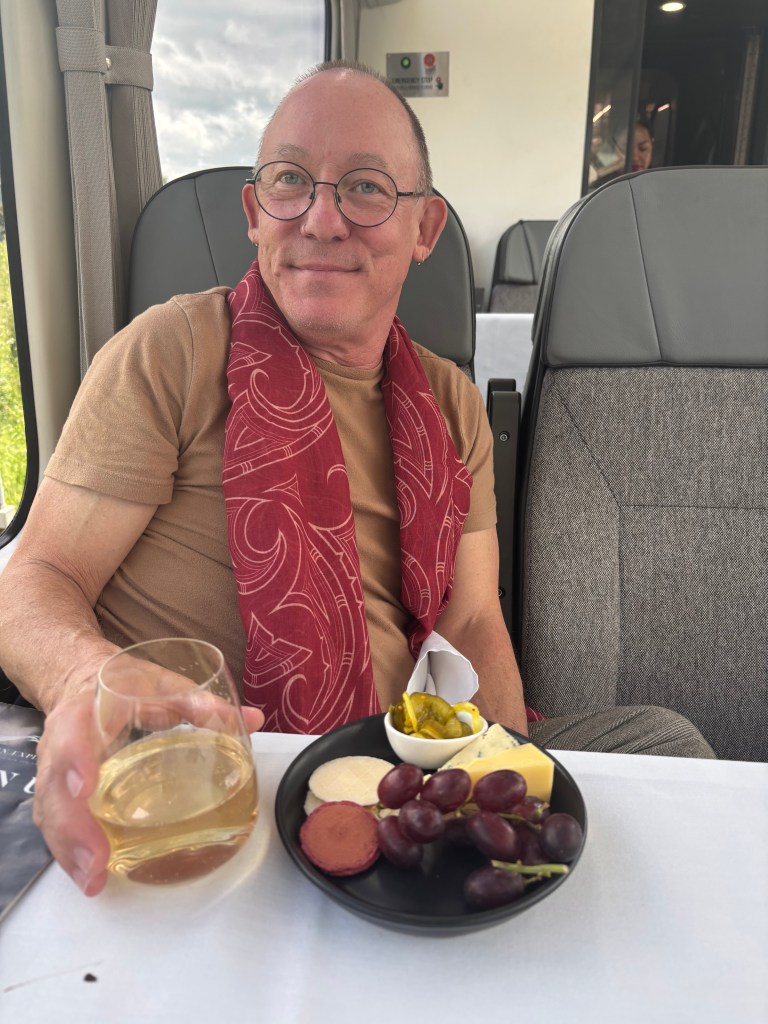
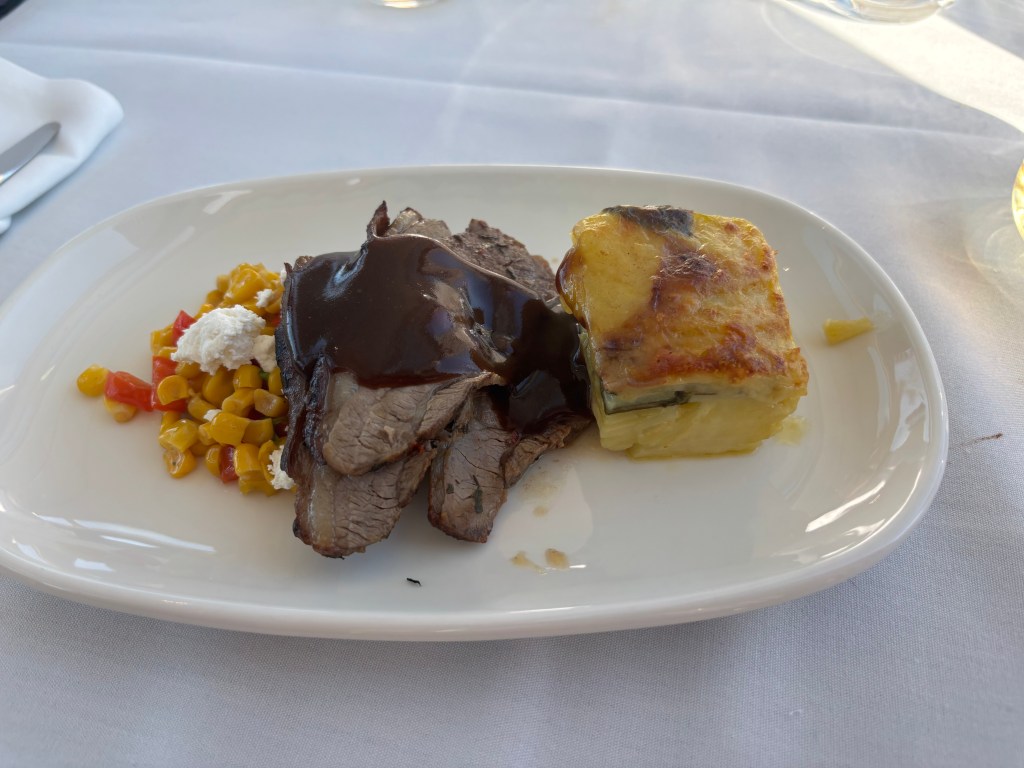
The food and drinks continued throughout the journey with an afternoon platter, dinner, and desert.
Despite a smooth start, the latter part of our journey into Auckland slowed due to track work and heat-related speed restrictions. The delays were modest—about twenty minutes—but enough to remind us that New Zealand’s rail network, while scenic and well-maintained, must constantly adapt to the natural conditions that shape the country. Shortly before arrival, the train manager came through the Scenic Plus carriage asking if anyone needed a taxi arranged. It was a thoughtful courtesy and we gladly put our names down.
Once off the train, we crowded into a taxi with eight other passengers, winding our way through the late-afternoon streets of Auckland. The city immediately felt bigger and more cosmopolitan than anywhere we had visited so far. Known as the “City of Sails,” Auckland stretches between two harbours—Waitematā to the east and Manukau to the west—and is crowned with volcanic cones, leafy suburbs, and a skyline that rises confidently above the water. Nearly a third of New Zealand’s population lives in the greater Auckland area, giving the city a metropolitan energy that still somehow retains a relaxed, Kiwi sensibility.
Our destination was the Four Points by Sheraton, right in the heart of the Central Business District. The CBD is a dense mix of modern office towers, international retail brands, university buildings, transit links, and dining options ranging from quick street food to elegant restaurants. Queen Street, Auckland’s main commercial corridor, runs just a short walk away, while downhill the city spills toward the harbour precincts—Britomart, the Viaduct, and the ferry terminals that connect to the islands of the Hauraki Gulf.
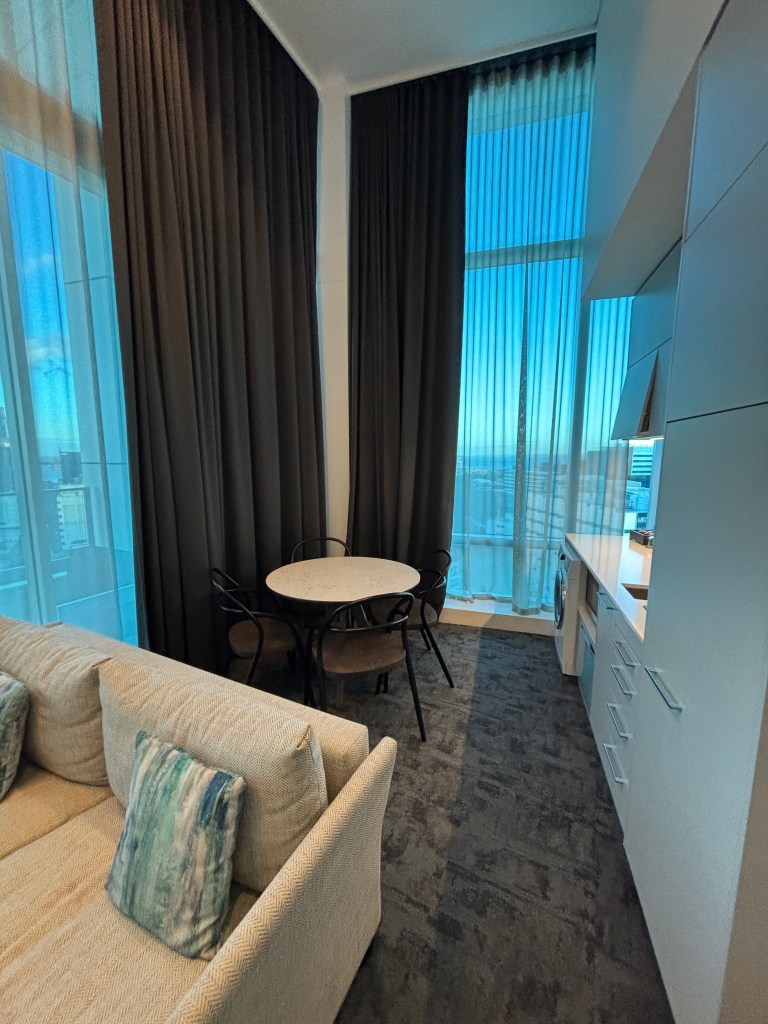
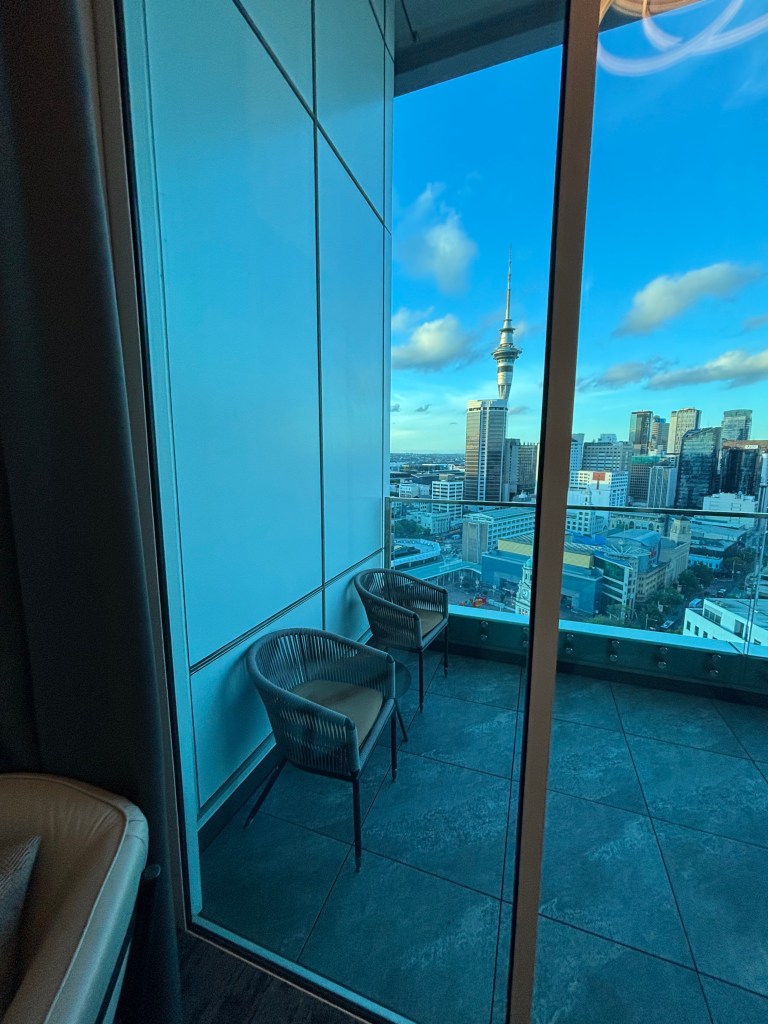
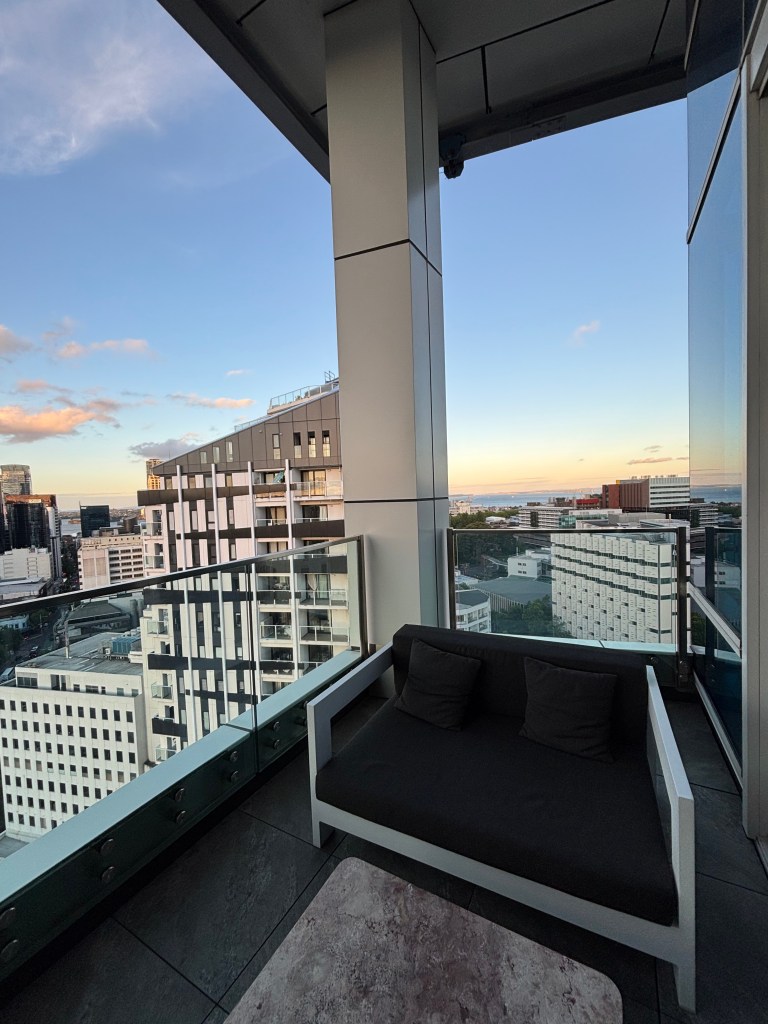
Stephen, ever the planner, somehow managed to secure the hotel’s only two-bedroom suite. Located on the 20th floor, it offered sweeping views of the city and its skyline. We had our own private balcony—perfect for morning coffee or watching the lights of the city come alive after sunset. The suite itself was spacious and thoughtfully laid out, complete with a fully equipped kitchen, separate living area, and two proper bedrooms with their own bathrooms. After a long travel day, it felt less like a hotel and more like a temporary home perched above Auckland’s urban pulse.
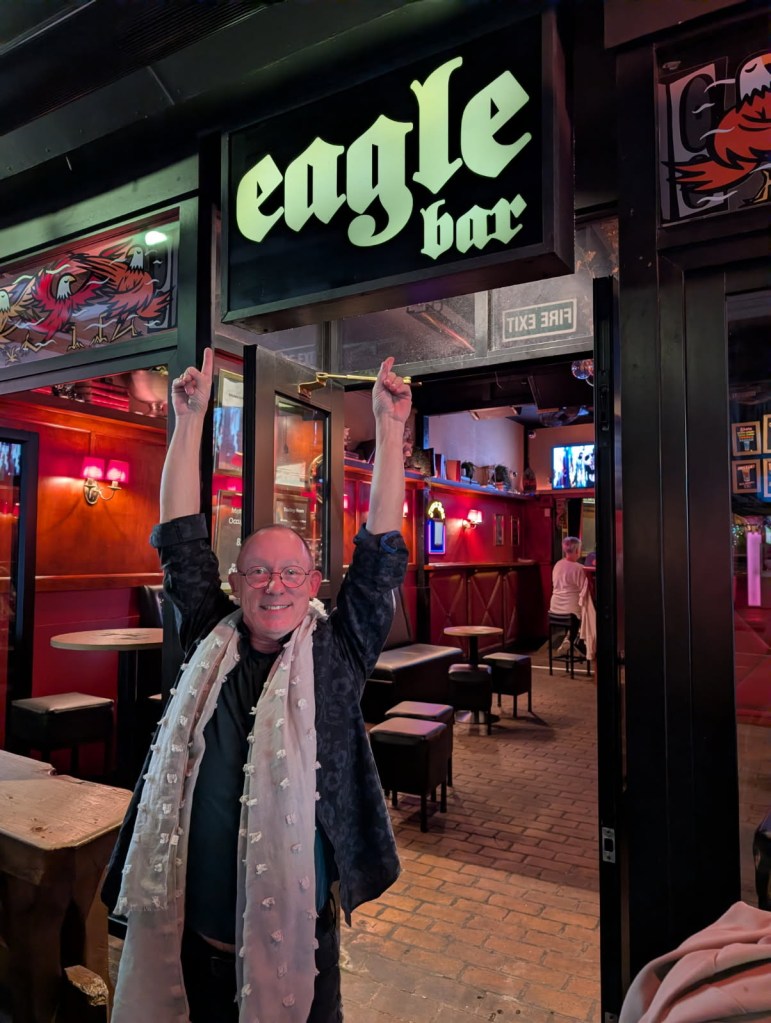
Having eaten so well on the train, neither of us was in the mood for a full dinner. Instead, we decided to stretch our legs and head out for a drink. Google Maps suggested a short walk, but in true big-city fashion we managed to take a longer, more circuitous route before finally finding The Eagle. Located on a lively block, it was one of several gay bars in the area, with The Saloon just a few steps away. We made a mental note to return and explore more of them during our three-day, four-night stay.
Auckland’s LGBTQ+ community is one of the most visible and vibrant in the country. The city has long been a cultural center for queer New Zealanders, bolstered by inclusive nightlife, advocacy groups, and community hubs that foster a sense of belonging. New Zealand itself is widely regarded as one of the most progressive countries in the world when it comes to LGBTQ+ rights. Homosexuality was decriminalized in 1986, same-sex marriage has been legal since 2013, and discrimination based on sexual orientation or gender identity is prohibited by law.
The Eagle felt relaxed and welcoming, being a Sunday there were only a few people in the bar but that was fine by us. After satisfying our thirst, we navigated back to the Four Points by Sheraton, this time taking a much more direct route. The evening breeze followed us all the way to the hotel’s entrance, and with the city lights shimmering below our suite balcony, we called it a night.
NEW ZEALAND TOUR DAY 14
 Anthony's Travel Adventures