DAY 9 – AORAKI MT COOK
We began the morning with breakfast at the Hermitage before meeting our group for the Glacier Explorers Boat Tour — an outing that would take us onto Tasman Lake, a body of milky-blue water formed by the retreat of the mighty Tasman Glacier.
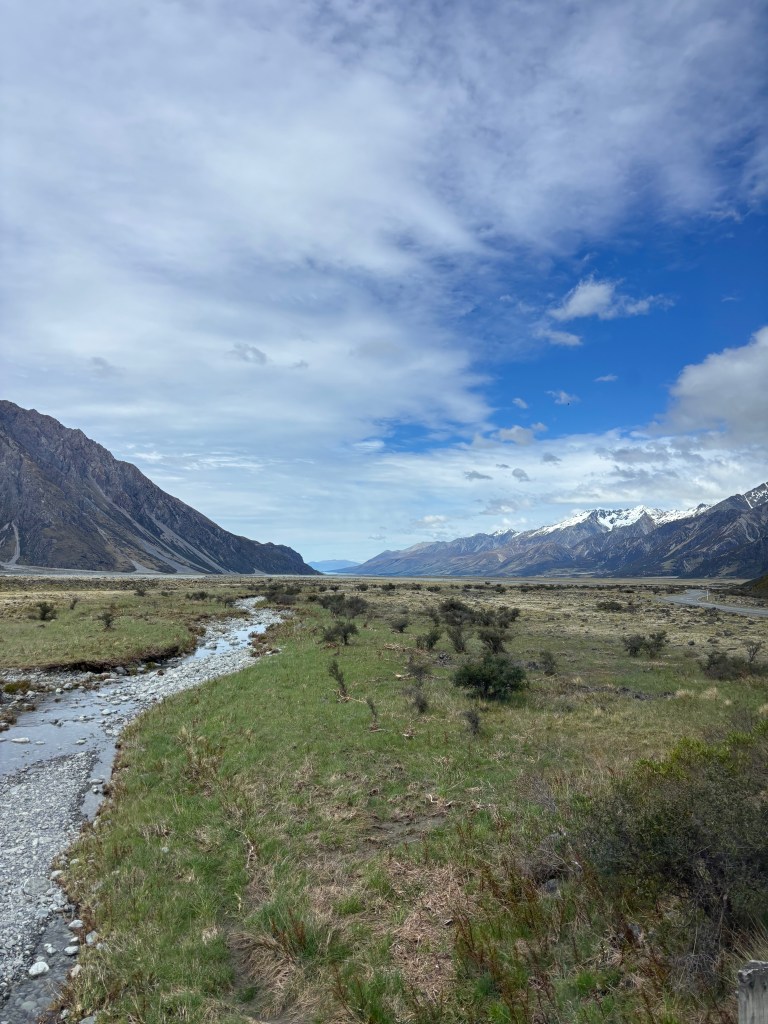
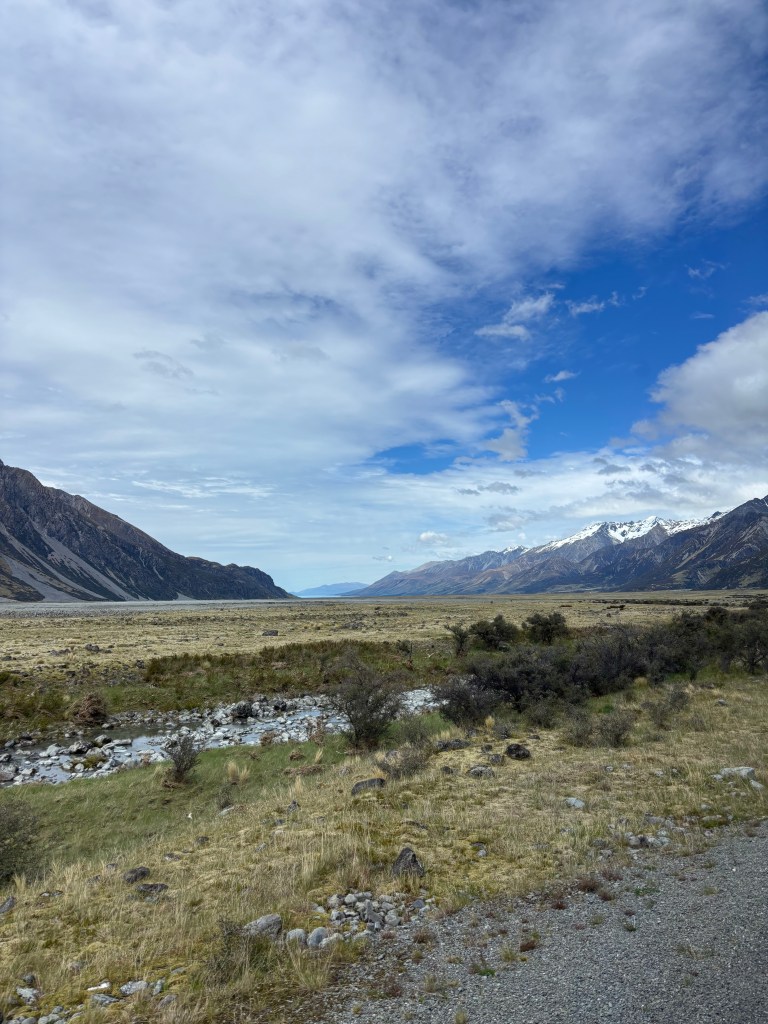
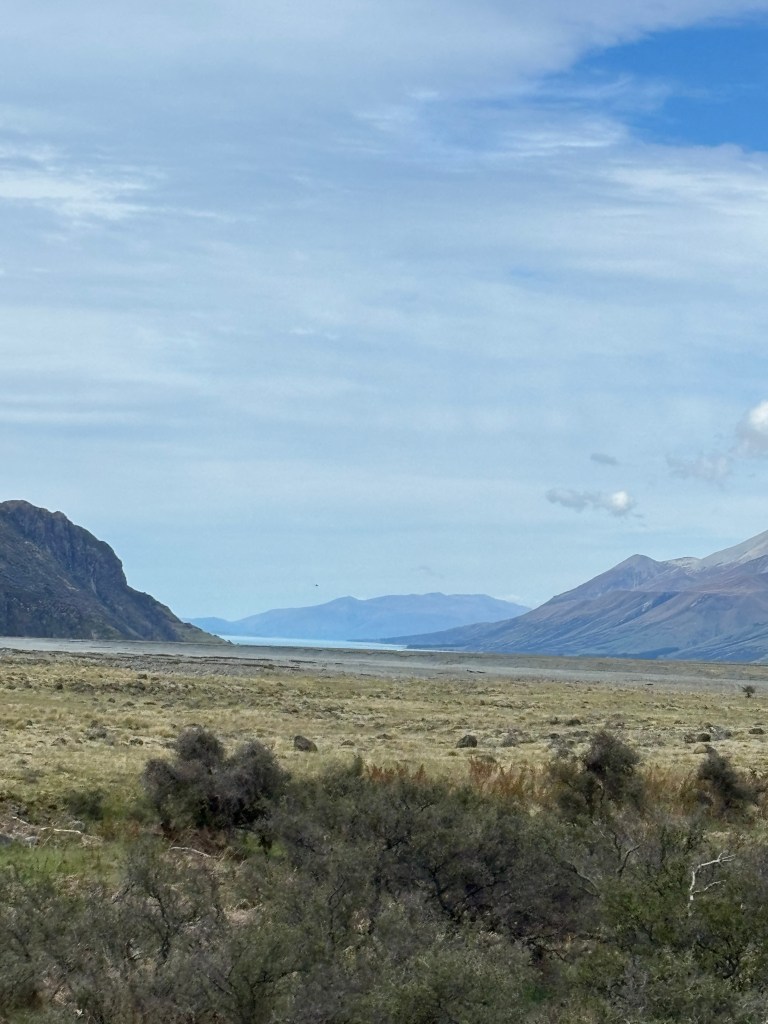
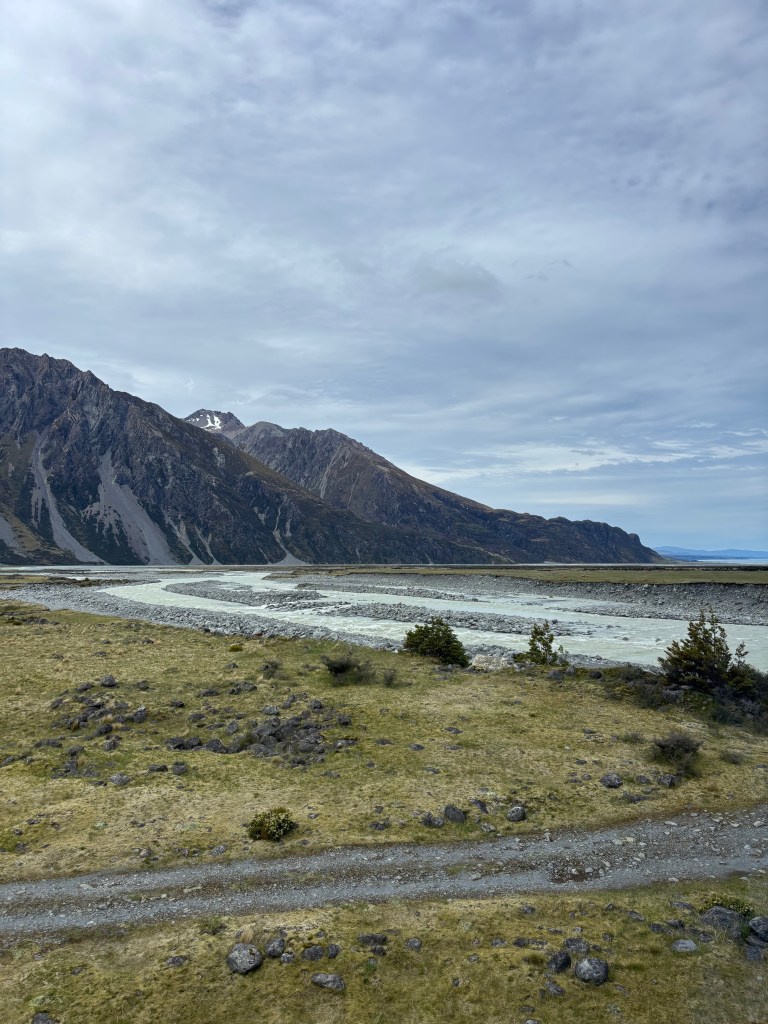
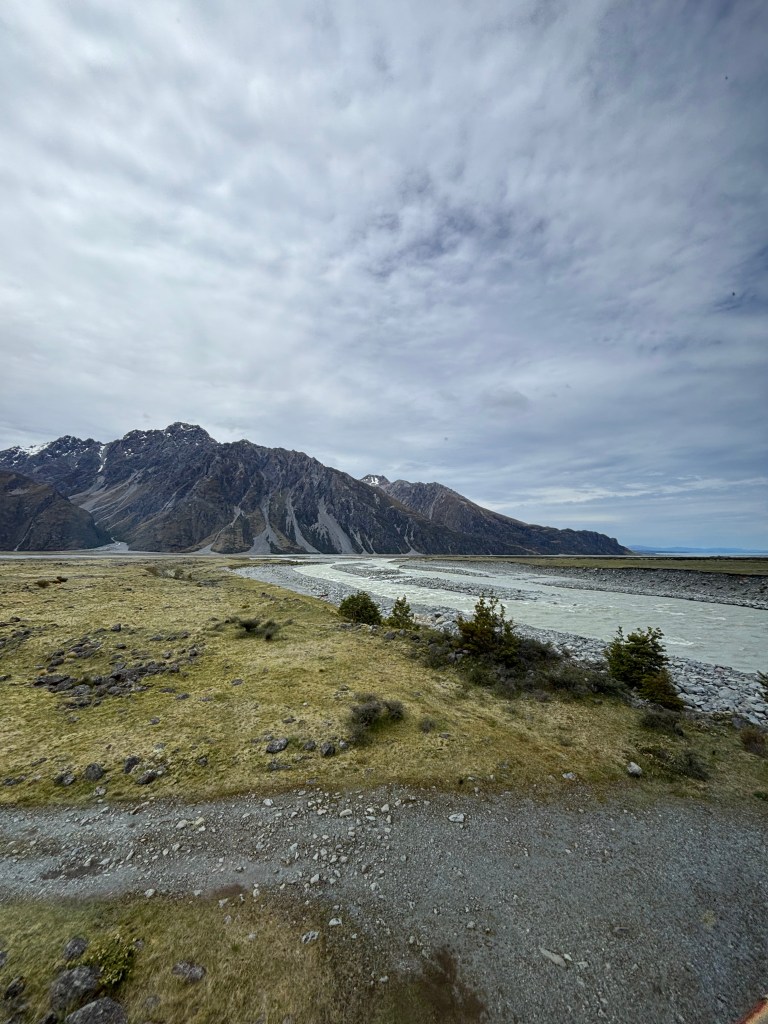
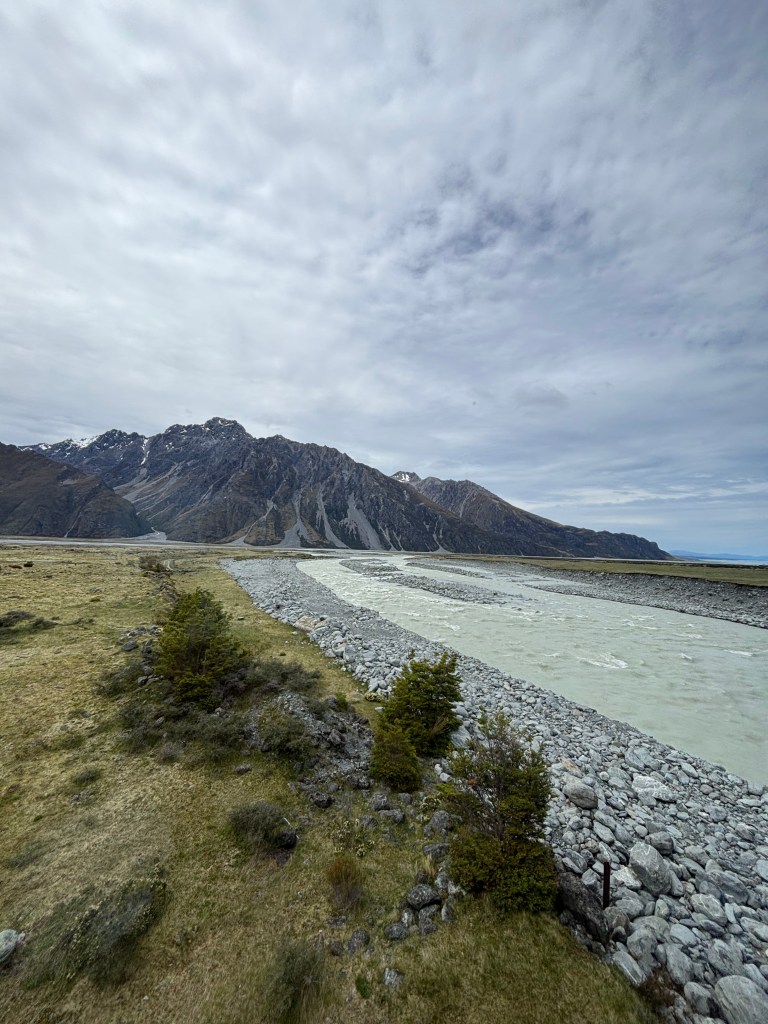
It was only a short bus ride from the hotel to the trailhead, where we set out on the 1.5-kilometre walk to the lake. The path wound through a landscape shaped by ice and time: rocky moraine walls, sparse alpine plants clinging to the ground, and distant peaks still dusted with snow. As we crested the final rise, the lake appeared — calm, opaque, and dotted with icebergs that had recently calved from the glacier.


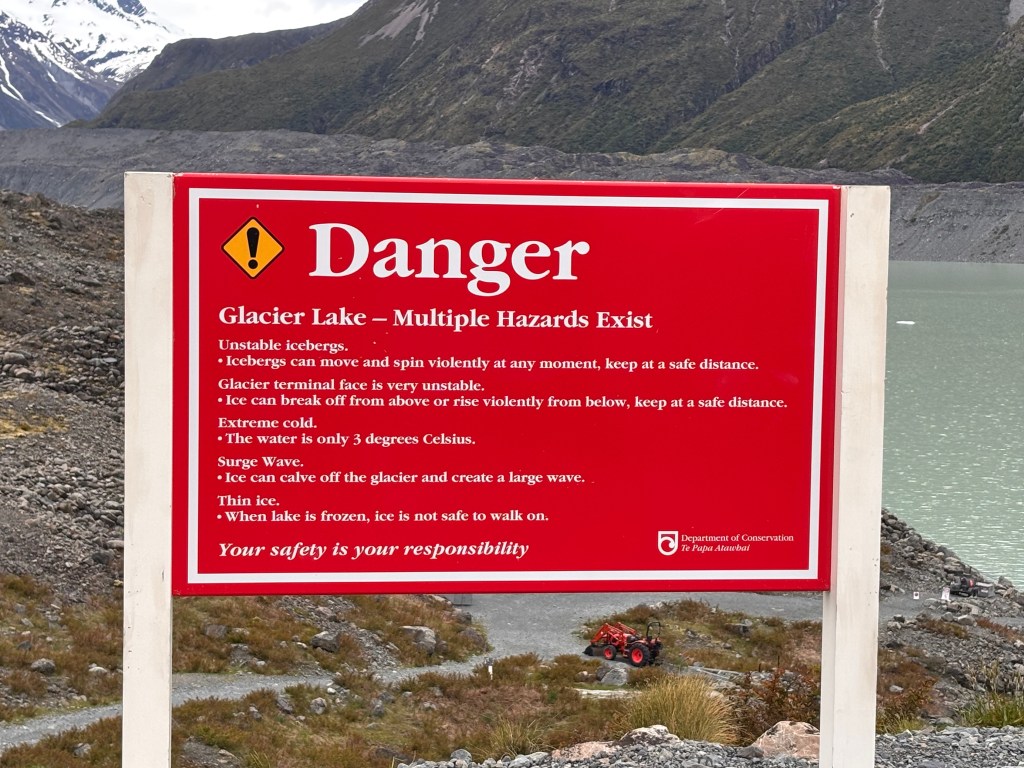


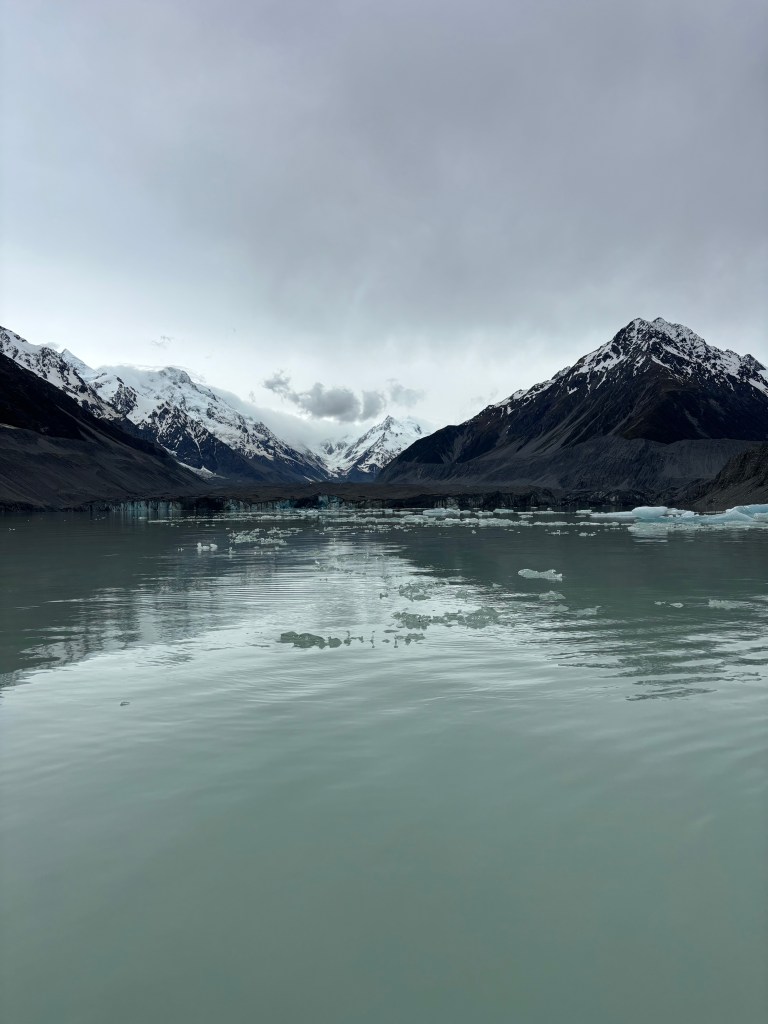
At the shoreline, we boarded a series of small, sturdy boats designed to navigate the cold, sediment-rich waters. From the moment we pushed off, it felt as though we were gliding through another world — one defined by silence, scale, and the quiet drama of a glacier in retreat.

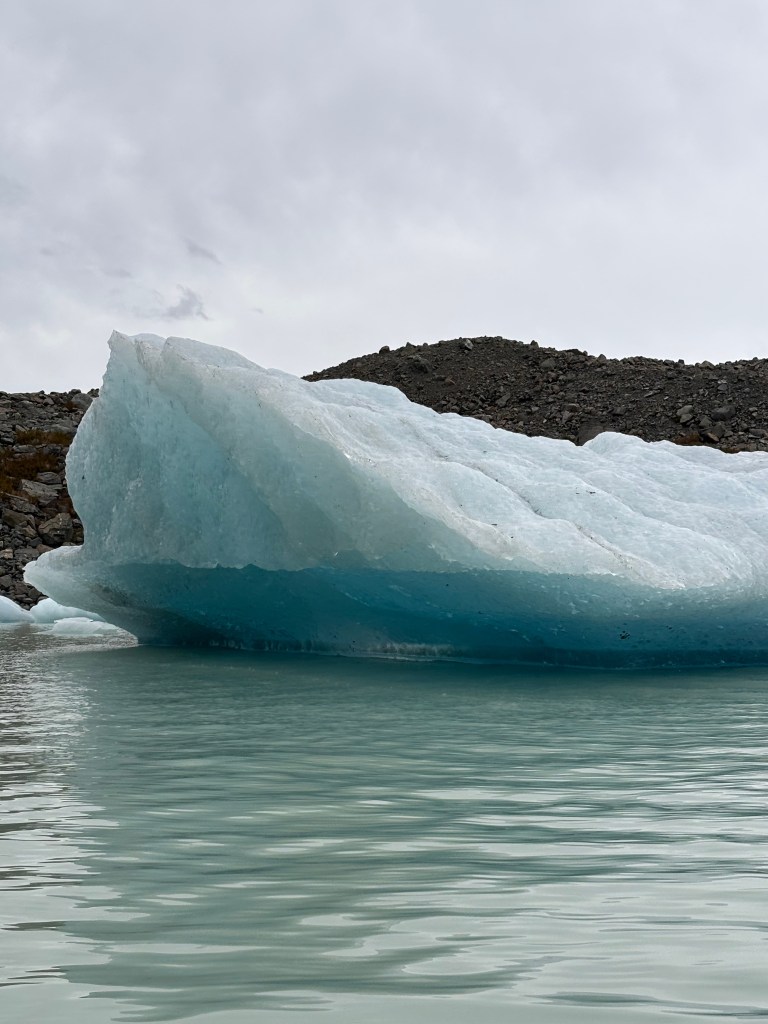
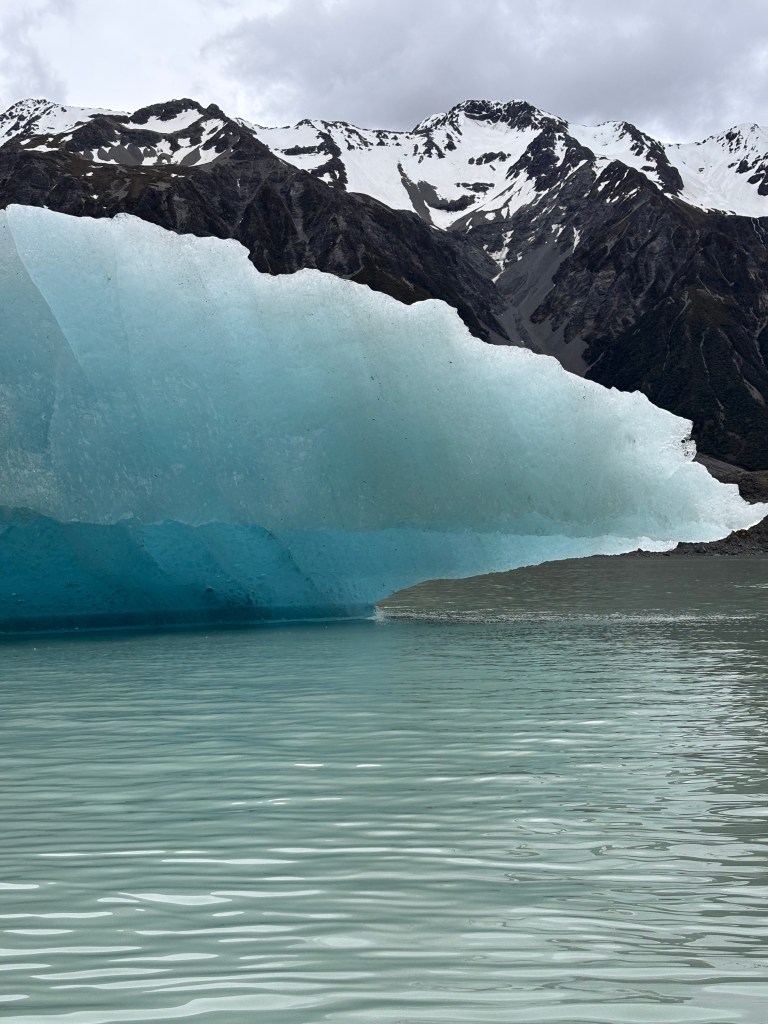
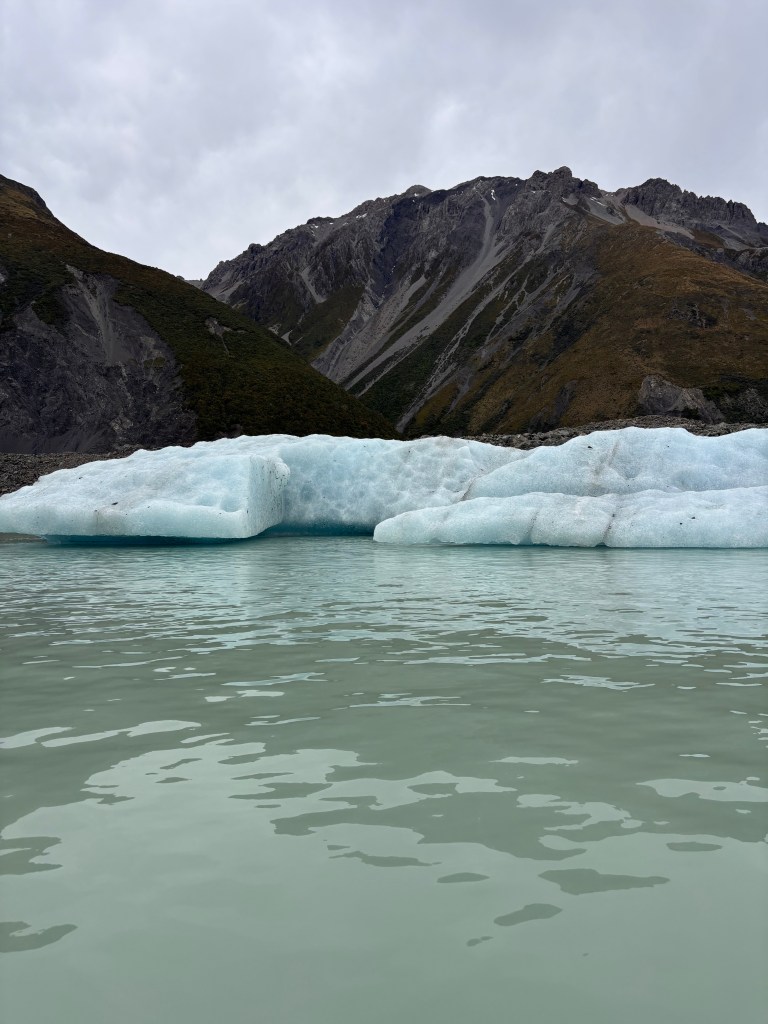

The Tasman Glacier is the longest glacier in New Zealand, stretching more than 20 kilometres down the valley. Over the past several decades, it has been retreating at a striking pace, forming and enlarging Tasman Lake as the ice melts and the terminus pulls back. The lake itself didn’t exist in its current form until the late 20th century; now it is several kilometres long and continues to grow each year. Because of the high quantity of finely ground rock suspended in the water — known as “glacial flour” — the lake carries its distinctive milky turquoise colour.
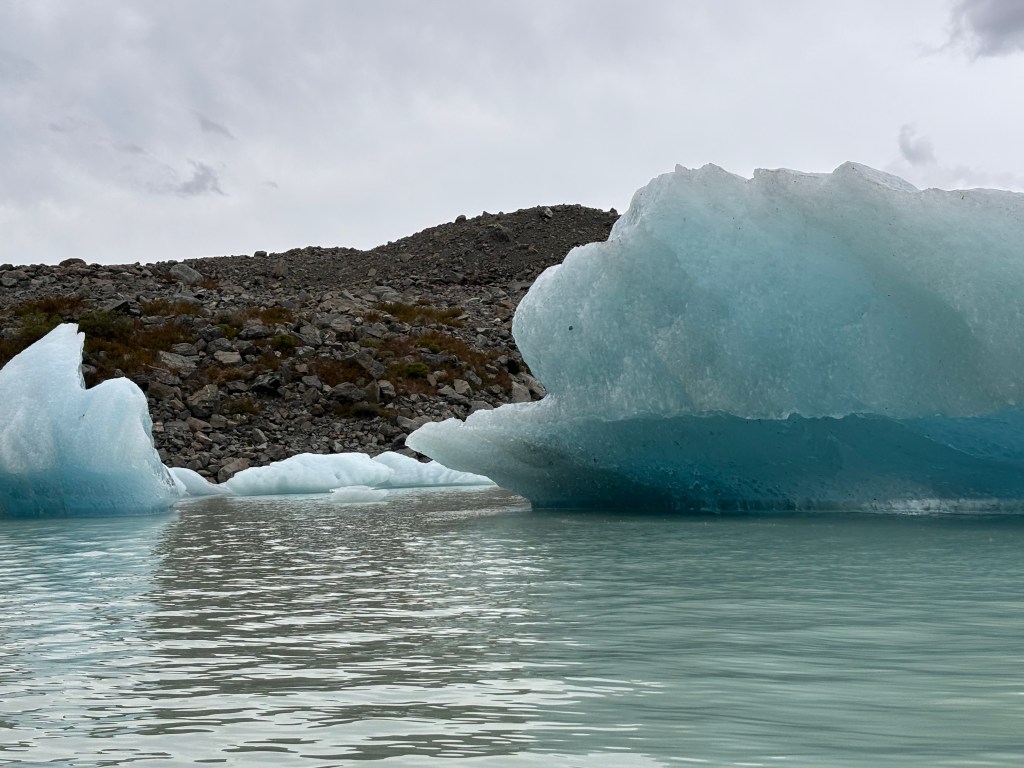
Seeing the glacier up close is very different from viewing glaciers in places like Alaska or Antarctica. In those regions, the ice faces are often towering cliffs that descend directly into the sea, calving dramatically from immense, bright-blue walls. The Tasman Glacier, by contrast, has a much lower, more subdued terminus. Its surface is coated with debris from the mountains around it — a patchwork of rock and ice — giving it a rugged, earthy appearance rather than the pristine glacial blue associated with polar regions. Instead of massive thunderous calving, the Tasman Glacier tends to drop smaller chunks into the lake, which drift silently across the water like floating sculptures.
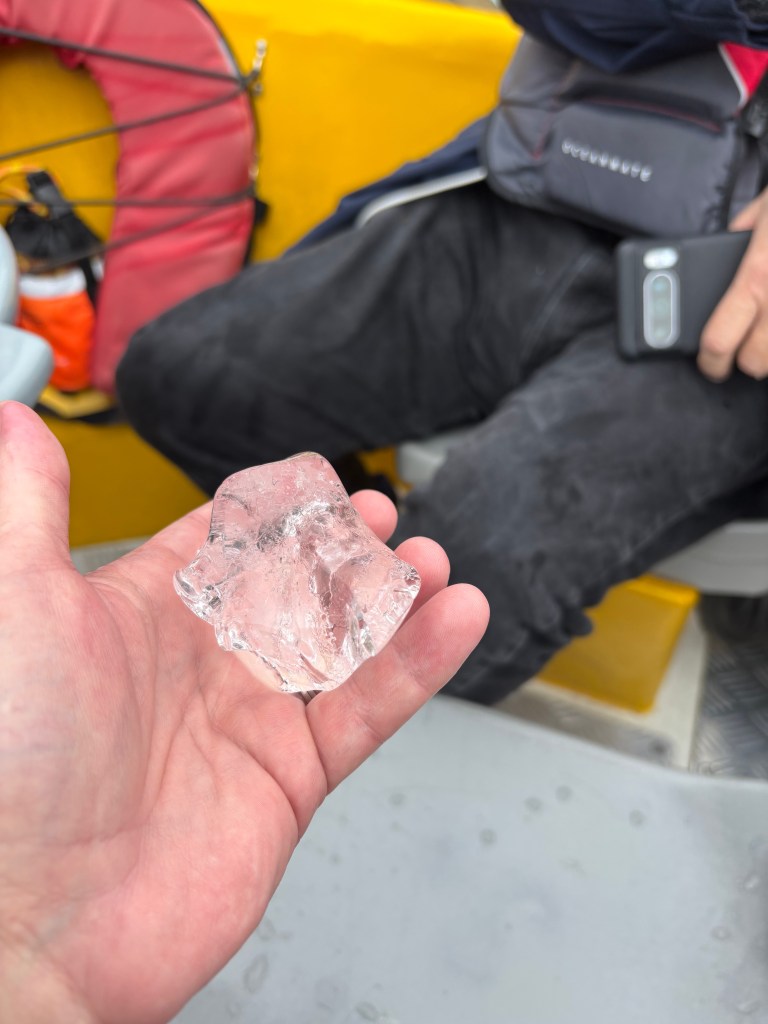


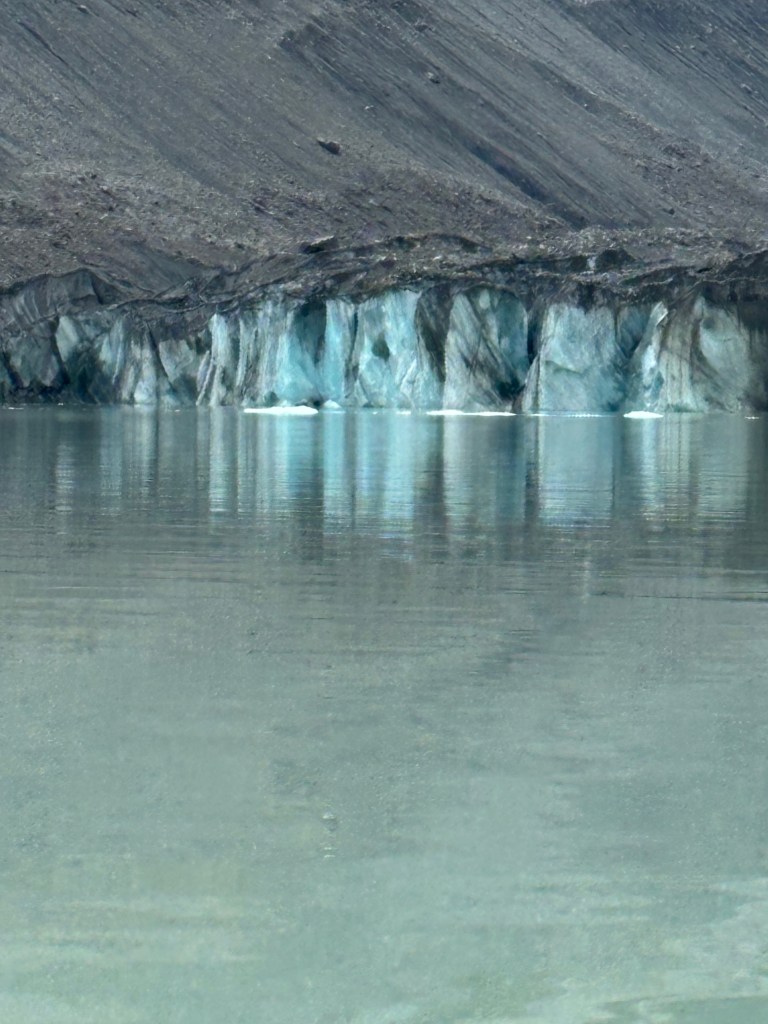
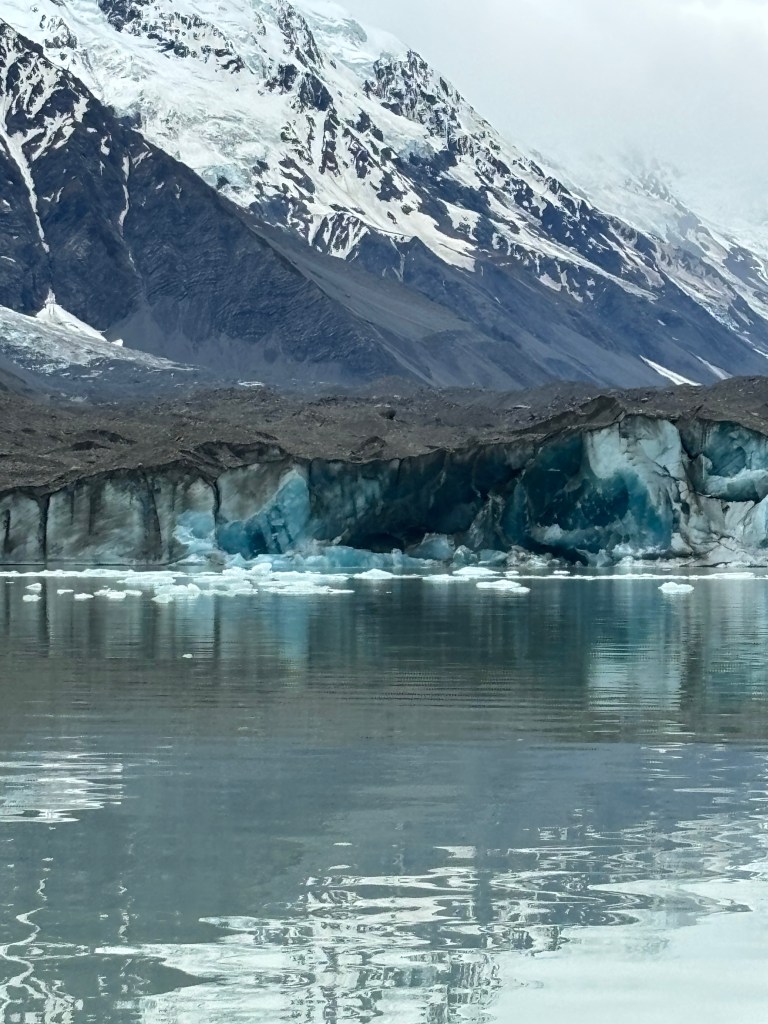

Yet the setting here is no less powerful. The mountains rise sharply around the valley, the air carries a cold clarity, and the sheer scale of the glacier — even in its changing state — is humbling. Our guide steered the boat as close as safely possible, allowing us to admire the icebergs up close, each one uniquely shaped by wind, water, and time.
It was a rare chance to witness a glacier not as a frozen monument, but as a living, shifting landscape — one that continues to carve, melt, and reshape the valley in ways both beautiful and bittersweet.
 Anthony's Travel Adventures